The Rebellious Image: Germaine Dulac and the Feminine Imagination in Surrealism
On the occasion of the exhibition dedicated to filmmaker Germaine Dulac, a pioneer in avant-garde film and a key figure in cinematographic surrealism, the Museu Tàpies has organised a debate centred on exploring the symbolic, aesthetic and political realm of the feminine imagination in surrealism.
From a critically rigorous and poetically attuned perspective, the event constitutes a space for reflection on the forms in which female artists and thinkers have intervened in, expanded or subverted the codes of surrealism, often conceived from a masculine perspective. Debate participants will consider questions such as the construction of the body and desire, feminine authorship within the avant-garde and the relationship between cinema, dreams and symbolic liberation.
“The Rebellious Image: Germaine Dulac and the Feminine Imagination in Surrealism” is an invitation to rethink avant-garde narratives on the basis of gesture, symbolism and rupture, while likewise paying attention to how an avant-garde movement that was able to transform the invisible into image and desire in language, might resonate in our day.
PROGRAMME
6 pm. Presentation of the session, by the Museu Tàpies
6.10 pm. Tami Williams, “Germaine Dulac and Long Impressionist Cinema”
6.40 pm. Julia Ramírez Blanco, “Poetics of the Anti-Fascist Body”
7.10 pm. Elena Castro Córdoba, “Dance, Images, Dance!”
7.40 pm. Debate with Tami Williams, Julia Ramírez Blanco and Elena Castro Córdoba, moderated by Bruna Lo Biundo
20.15 h. Closing
PARTICIPANTS
Tami Williams is Associate Professor of English and Film Studies at the University of Wisconsin-Milwaukee, and has been president for two mandates of Domitor – International Society for the Study of Early Cinema (2015–2023). She is the author and editor of various books on early cinema and modern cinema, including Germaine Dulac: A Cinema of Sensations (2014), Global Cinema Networks (2018), Germaine Dulac: What Is Cinema? (2019, awarded the CNC Film Book Prize in 2020), Provenance and Early Cinema (2021) and Crafts, Trades, and Techniques of Early Cinema (2024). A specialist in intermediality and intercultural exchange, she has organised international retrospectives in leading institutions, including La Cinémathèque française, Musée d’Orsay, Il Cinema Ritrovato, Le Giornate del Cinema Muto, the Library of Congress and the Lincoln Center for the Arts. She is a member of the committee of Women and Film History International.
Julia Ramírez Blanco is a Ramón y Cajal Researcher at the Universidad Complutense de Madrid. Her research connects art history, utopian studies and activist movements. She has published various monographs, including Artistic Utopias of Revolt (Palgrave, 2018), 15M. El tiempo de las plazas (Alianza, 2021), Amigos, disfraces y comunas. Las hermandades de artistas del siglo xix (Cátedra, 2022) and La ciudad del Sol. Le mouvement 15M entre formes et performances (Éditions Lorelei, 2023). She is also a book and journal issue editor, as with Los ismos del siglo xxi (Alianza, 2025), with A. M. Guasch. She has done research residencies in New York, Paris, Nantes, Amiens and Princeton. With Lise Lérichomme and Sally Bonn, she has co-directed the research project and exhibition Grande Révolution Domèstique-Guise, on feminist utopias at the Familistère de Guise, France. She was on the editorial board of The Society for Utopian Studies and is a member of the international research group Center for Artistic Activism (C4AA). Currently she is researching environmental utopias in the face of climate crisis.
Elena Castro Córdoba has a PhD in Feminist and Gender Studies from the Universidad Complutense de Madrid, a Master in Gender, Media & Culture from Goldsmiths University, London, and a BA in Philosophy from the Universidad Complutense de Madrid. She has been an FPU pre-doctoral researcher at the Universidad Complutense de Madrid, where she developed a thesis on queer and affective temporalities applied to the archive, and is co-founder of the artistic collective Ontologías Feministas, specialised in virtuality and practices with a feminist perspective. She is currently a lecturer at EINA and a teaching collaborator at Universitat Pompeu Fabra. She researches and writes on contemporary feminism, the archive, temporal politics and their interrelationship with contemporary aesthetics.
Bruna Lo Biundo is a researcher specialised in the representation of women in the period between the wars, with particular interest in surrealism and the feminist film pioneer Germaine Dulac. With a PhD in French Literature from the University of Palermo, she has worked as a curator and head researcher in institutions such as the Mémorial de la Shoah and La Contemporaine (Nanterre University), as well as projects on female immigrants and refugees in France in the 20th century. She is co-founder of the association Past/Not Past, and is currently preparing a documentary exhibition on Germaine Dulac. Since 2024, she has coordinated the Master in Audiovisual Heritage at the Institut National de l’Audiovisuel, where she also teaches on curating and participative practices.
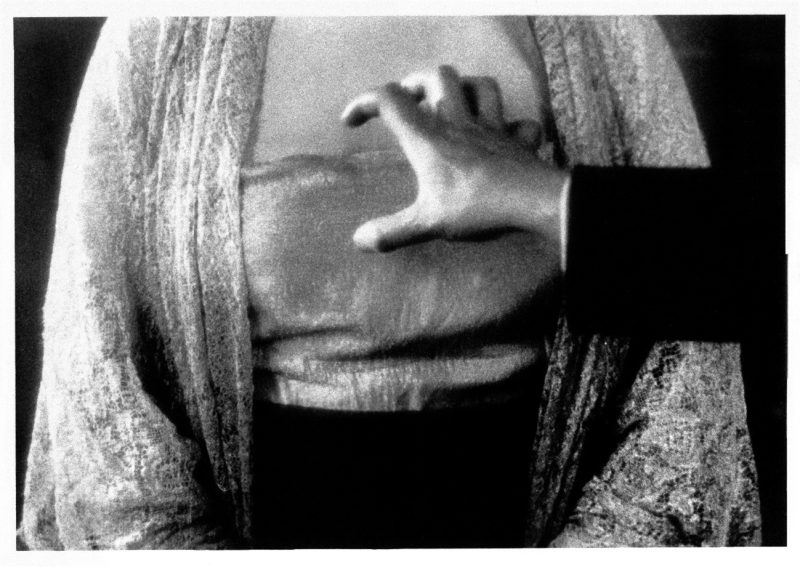
Film still from La Coquille et le Clergyman (The Seashell and the Clergyman), 1928.
Playlist with the video conferences:
Dates
03.02.2026 | 18:00-20:30
Category
Public Programme
Meeting point
Museu Tàpies
Related
Date
3 February 2026
Time
6 pm
Length
2 h 15 min
Price
€3
Free for students
Leaflet
Download the leaflet of the event.