From 13.10.2026, the museum will be temporarily closed for renovations. We look forward to seeing you at the activities we have prepared in other espaces. Please visit agenda at our website.

From 13.10.2026, the museum will be temporarily closed for renovations. We look forward to seeing you at the activities we have prepared in other espaces. Please visit agenda at our website.

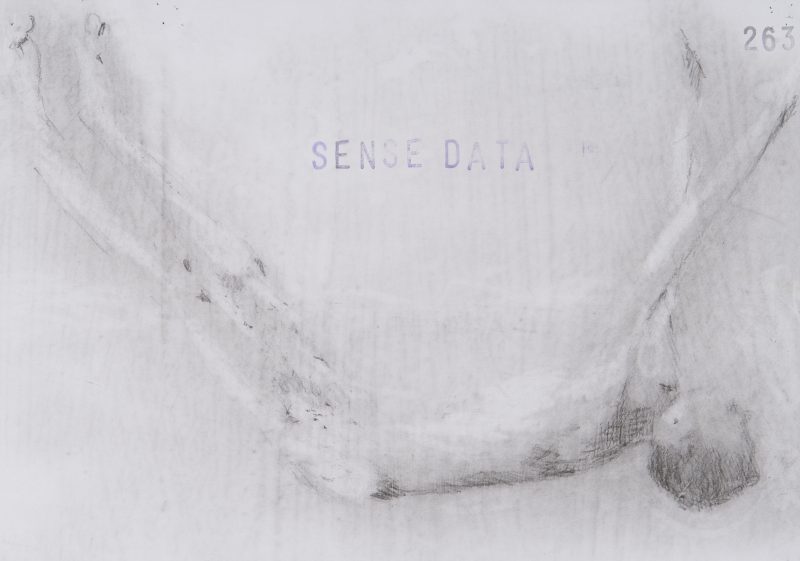
In the context of the exhibition Àngel Jové. De intactu, we propose a debate on the figure of Àngel Jové from a relational perspective, understanding his practice not as an isolated gesture, but within the corpus of shared fieldwork that redefined the conditions of artistic creation in a time of intense cultural transformation. Rather than referring to a generation in the strict sense of the term, what imagine here is a constellation: a web of proximities and frictions between artists and thinkers, which through a variety of languages questioned established forms of representation while exploring new connections between image, material and language. In this context, Jové’s practice developed as a permeable space where film, poetry and action became vehicles for experimentation and ideas.
In the opening lecture for this debate, Xavier Antich proposes a framework for reading Jové’s work that might situate this communicative aperture in relation to the cultural and political transformations of that time, accentuating the persistent necessity to rethink forms for the production of meaning through artistic practice.
The debate to follow features the participation of Frederic Amat, Antoni Llena, Rosa Vergés and Patricia Dauder. This group does not solely respond to generational criteria, but also to the possibility of activating correspondences between practices.
The presence of Frederic Amat is particularly relevant due to his proximity to that same context of disciplinary openness that situated Jové’s work: Amat’s practice has shifted constantly between painting, scenography, film, visual poetry and spatial intervention, understanding art as an expanded terrain where creative languages contaminate each other. In Amat’s career, as with Jové’s, the image does not work as a stable form of representation, but as an area of tension between materials, symbols and experience. In the case of Antoni Llena, the artistic gesture shifts towards zones of indeterminacy, where matter, signs and the void work as open languages, in consonance with the tensions found in Jové’s work as well. From a similar perspective, Rosa Vergés introduces the cinematographic dimension as a medium as well as a form of thought and construction of temporality, in dialogue with the film experiences that the constellation engaged in. So as to avoid any sort of closed reading of Jové, Patricia Dauder’s presence shifts this space for ideas into the present, pointing to areas of persistence, to echoes and re-readings, and not solely with the purpose of setting out a linear genealogy. Her artistic practice reactivates questions that were already present in Jové’s time—fragility of the image, the temporal condition of experience, the relationship between document and fiction—circulating them within a different regime of sensibility.
Moderated by Maria Josep Balsach, curator of the exhibition Àngel Jové. De intactu, this debate is conceived as a space for ideas, where memory is more like a field of intensities than a past fixation, enabling us to once again question the ways that art, life and context relate.
PROGRAMME
6 pm. Presentation and welcome by the Museu Tàpies
6.10 pm. Lecture, “Àngel Jové: The Lost Gaze”, by Xavier Antich
7 pm. Discussion with Xavier Antich, Frederic Amat, Patricia Dauder, Antoni Llena and Rosa Vergés. Moderated by Maria Josep Balsach
8 pm. Closing
Frederic Amat
Amat is the creator of a body of pictorial work characterised by an expanded conception of painting as well as an interdisciplinary practice, known internationally in exhibitions and publications. He has created stage designs for dance, theatre and the opera, as well as directing spaces for the performing arts and illustrating literary works, like One Thousand and One Nights and The Odyssey. He has also done interventions in architectural space, featuring painting, sculpture and ceramic work. Extending this practice, he has worked on the films Viatge a la lluna (based on the Federico García Lorca text), Foc al càntir (written by Joan Brossa) and El aullido (with a screenplay by Guillermo Cabrera-Infante).
Xavier Antich
Antich has a PhD in Philosophy and is Professor of Aesthetics at the University of Girona. Since 2022 he has been the president of Òmnium Cultural. He has published various books and hundred articles in books and specialised journals, as well as writing for various media outlets. From 2011 to 2022 he was head of the Board of Trustees of the Fundació Antoni Tàpies.
Maria Josep Balsach
Balsach is a Professor and Emeritus Chair in Contemporary Art and Culture at the University of Girona. She is an art critic, exhibitions curator and, with Xavier Antich, heads the research group Teories de l’Art Contemporani – UdG. She has been a member of the Joan Miró Chair (FJM – UOC – New York University, 2013–2019) and is currently a member of the research groups Visionary Women Art, Alma and GROC. Her research is focused on new readings of the art of the twentieth and twenty-first centuries from an interdisciplinary perspective, with an approach grounded in hermeneutics and symbolic interpretation. Balsach is the author of many essays and has published various books of poetry in collaboration with visual artists, including Eprath, Mär, Poemes de Brisgòvia and Galítsia. She is the winner of the Espais International Art Criticism Prize for the article L’art immaterial d’Arnold Schönberg, and won the City of Barcelona Award in the essay category for Joan Miró. Cosmogonies d’un món originari (1918-1939).
Patricia Dauder
Dauder is a visual artist who lives and works in Barcelona. Her practice focuses on sculpture, drawing, photography, film and installation, with work that explores the relationships between material, space, memory and perception. Over the course of her career, she has done various international artistic residencies in cities such as Bregenz, Prague, Porto, New York and Barcelona.
Her work has been seen in individual exhibitions in spaces such as Artium Museoa, La Virreina Centre de la Imatge, the Fundació Joan Miró, the Museu de Serralves, MARCO in Vigo and ProjecteSD, in Barcelona. Alongside this practice, she has done experimental film and visual essay projects, projecting her work at Xcèntric at the CCCB, the Loop Fair and in other specialised venues. She is also the curator of projects such as Frames of Mind and Llibres espa‘c’ials.
Antoni Llena
Llena was a pioneering artist in the mid-1960s in Catalan art povera and ephemeral art. In the 1980s he continued to work with cut paper, exploring work that was ephemeral and fragile in nature, leading him to reconsider constructive space and the idea of volume. He is likewise a creator of public art projects, expressing the same fragility as his work with paper. Alongside his visual production, Llena has had a literary career, with the publication of works such as La gana de l’artista (1999) and Per l’ull de l’art (2008). He has participated in exhibitions at Patio Herreriano in Valladolid, the Museo Nacional Centro de Arte Reina Sofía in Madrid and the Fondation Maeght at Saint-Paul-de-Vence, and has presented his art at Barcelona’s Fundació Joan Miró and Museu Tàpies, among other exhibition spaces. His work is found in the collections of Artium in Vitoria, the Museu Tàpies in Barcelona, Madrid’s Museo Reina Sofía and MACBA, among others.
Rosa Vergés
Vergés is a filmmaker, teacher and writer with a broad career in film, television and audiovisual creation. She has written and directed films like Boom Boom, Souvenir, Tic Tac and Iris, as well as various major documentaries, such as El Pavelló de la República, Barcelona, Negatif et Positif, Alberti, un poeta en la calle, García Lorca: De Granada a la Luna and L’Eixample Cerdà, illes en xarxa. She has also worked on television series like Para qué sirve un marido and Histoires de Famille: Maresme. Alongside this activity, she has worked intensely as artistic director for stage performances and projects, as well as in the creation of podcasts and institutional audiovisual productions.
Over the course of her career, Vergés has received recognition for her work, including the Goya Award for Best New Director, the Sant Jordi Award, the Fotogramas de Plata, the City of Barcelona Award, the National Culture Award of Catalonia and the Miquel Porter Moix Honorary Gaudí Award 2024.
Dates
22.05.2026 | 18:00-20:00
Category
Public Programme
Meeting point
Museu Tàpies
Time
18:00 h
Length
2 h
Place
Museu Tàpies (Carrer Aragó, 255, Barcelona)
Price
€ 4
Programme